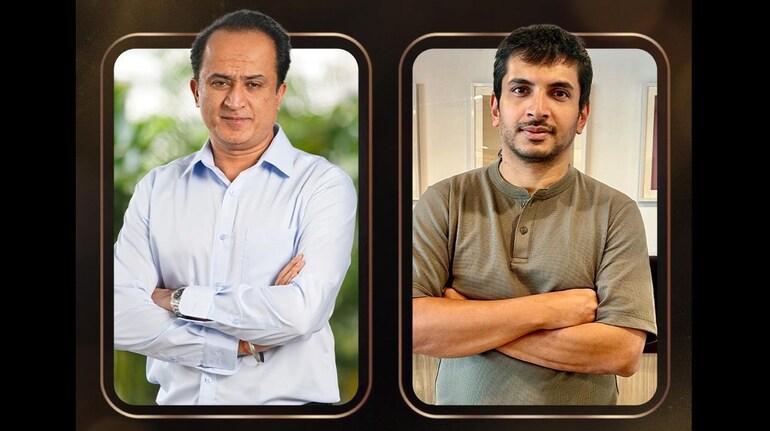

The biggest bottleneck in AI filmmaking isn’t technology or money — it’s talent.
That was the assessment from InVideo founder and CEO Sanket Shah at the Delhi AI Filmmaking Festival in conjunction with the AI Summit, where he and Abundantia Entertainment’s Vikram Malhotra unveiled a Rs 100-crore AI-led film studio that aims to produce five full-length commercial features over the next three years.
“I have gone to LA, I have met every Bollywood studio. There are just no people,” Shah said. “The irony is that there are so many jobs. Everyone will hire.”
According to him, studios are not searching for coders but for core filmmaking professionals — directors of photography (DOPs), assistant directors, and storytellers — who are willing to experiment with AI tools.
“We are not looking for AI engineers. We are looking for a DOP who is ready to spend two weeks playing around with AI. Directors already know how to prompt a set. This is just prompting a video,” he said.
Shah argued that traditional filmmakers are best positioned to adapt because the fundamentals of craft remain unchanged. “A good director will bring out a good film. That doesn’t change.”
The talent gap, he suggested, is precisely why initiatives like the AI Film Festival matter. While not designed as a hiring platform, the event organically connected creators with production houses. “We leave the lawn open and let people jam. Eighty percent found jobs somewhere — but that was a byproduct,” Shah noted.
The AI-led film studio
On the new venture, Malhotra said that the studio's structure is such that it splits responsibilities across the value chain. Abundantia will fund development, creative processes, talent and physical production, while Invideo will invest in technology infrastructure, AI systems and personnel.
The films will follow a conventional monetisation cycle — theatrical release first, followed by streaming — and will be financed through Abundantia’s existing ecosystem of captive funding and pre-sales, he added.
The studio will operate through the combined infrastructure of both companies rather than a standalone physical space, focusing specifically on filmmaking and performance advertising pipelines.
“What excites me most is the kind of voices we’re seeing — science fiction, stories rooted in Indian culture, deeply personal narratives,” Malhotra said. “These are the voices, powered and enabled by AI, that we want to bring into the mainstream business.”
He stressed that the model is human-led creativity enhanced by AI workflows. “The human talent and voice — researchers, writers, directors, technicians — will remain central. What changes is the workflow. From scripting to final output, it will be AI-backed.”
Malhotra added that audiences ultimately care about storytelling, not the tools behind it. “The audience doesn’t care whether it’s AI, animation, live action or hybrid. They want stories that entertain and deliver value.”
Redefining cost and scale
Shah offered nuance on AI’s economic promise. AI, he said, is not about shrinking small budgets further. “What AI is good at is not bringing Rs 8 lakh down to Rs 1 lakh, but bringing Rs 2 crore down to Rs 8 lakh.”
That shift, he argued, allows ambitious genres like science fiction or large-scale animation — traditionally dependent on massive capital — to become viable within Indian market economics.
Malhotra echoed that AI’s contribution cannot be easily quantified because it will “flow across the entire value chain.”
Shah suggested India may be moving faster than Hollywood in adopting AI filmmaking workflows. “It feels more than L.A.,” he said, noting his meetings with production houses in both markets
Discover the latest Business News, Sensex, and Nifty updates. Obtain Personal Finance insights, tax queries, and expert opinions on Moneycontrol or download the Moneycontrol App to stay updated!
Find the best of Al News in one place, specially curated for you every weekend.
Stay on top of the latest tech trends and biggest startup news.